Hi! Welcome to Ann Evans' blogspot.


Showing posts with label Coventry. Show all posts

Saturday, 29 May 2021

Coventry Writers' Group has been Telling Tales!


Coventry Writers’ Group has produced a brand-new anthology celebrating the city becoming the UK City of Culture 2021. Entitled ‘Telling Tales’ it features 21 creative pieces of writing in the form of short stories, articles and poetry, all with a Coventry theme.

Despite lockdown and the group not being able to meet since the start of the pandemic, the group have kept in touch on line and virtually, and managed to write and put the book together. And just in time for the official start of the UK City of Culture celebrations.

 The CWG is the longest established writing group in the city, founded in the 1950s. Contributors to the anthology include novelist and playwright Margaret Egrot, romance novelist Ella Cook, children’s author Ann Evans, poet Emily Lauren-Jones, Queen of African horror Nuzo Onoh, article writer Margaret Mather, short story writer Hilary Hopker and writer David Court who has recently had one of his sci-fi stories adapted for the screen. There are also excellent pieces by up-and-coming writers in the group.

 Between the covers you'll find humorous stories, nostalgic tales, factual articles about this great city, and poems that you'll love. The actual cover of the anthology features a beautiful original watercolour painting of Bayley Lane by local artist, and secretary of the CWG, Hilary Hopker.

 Chair of The Coventry Writers’ Group, Maxine Burns said: “As a group, we have published a number of anthologies over the years, and we are proud to present our latest medley of stories, poems and articles written by some of our members to mark the city becoming UK City of Culture 2021.

 “The CWG has always welcomed all calibre of writers, be they complete novices, multi-published, or anywhere in between. The group offers enthusiasm, support and advice to all. We hope people will enjoy reading this book as much as we have enjoyed writing it.”

 Once Covid restrictions are fully lifted, the Coventry Writers’ Group hope they will be able to launch the anthology with events around the city. They are hopeful too that they will be able to resume their monthly meetings at the Big Comfy Bookshop, Fargo Village, on the first Tuesday of each month from 8pm – 10pm.

 Telling Tales – Celebrating Coventry UK City of Culture 2021 is available from Amazon and all good book shops, priced £5.99 paperback, £1.99 kindle.

ISBN 979 8746368317


Saturday, 16 December 2017

Coventry - UK City of Culture


Coventry's Lady Godiva in bronze. Photo by Rob Tysall.

As most people will know, Coventry, my home city, is to be the UK City of Culture 2021. Naturally, its citizens are celebrating, and hoping that the new status is going to bring more prosperity into the city, as it has done for Hull, the current UK City of Culture.


There was competition for the title from Paisley, Stoke-on-Trent, Sunderland and Swansea. And actually, if Sunderland had won it, that would have been my second choice as my parents and past ancestors all hail from there.

The title is awarded every four years and Coventry will be the third UK City of Culture. Londonderry being the first in 2013, followed by Hull. Our city has so much going for it despite no longer having the motor and machine tools industries that it once had. During the 1950s and 60s Coventry was the second largest car manufacturing city in the world. It also led the way with machine tools. Alfred Herbert Ltd was once the largest machine tools manufacturing business in the world. And while that’s no longer there, the Herbert Art Gallery and Museum is named after him.

The city's present Lady Godiva, Pru Poretta.
Photo Rob Tysall
 Sir Frank Whittle, the inventor of the jet engine was born in Coventry. There’s a centre in honour of his work at the Midlands Air Museum, Baginton, which is just on the city boundaries. And there’s a statue of him alongside the futuristic-looking Whittle Arch in Millennium Place in the city centre.

Earlier in the city’s history Coventry pioneered many industries – bicycles, clocks and watches, ribbons. In early Medieval times it was a thriving market town. Today, the city’s museums, buildings and monuments remind people of its industrious past. And today, businesses are flourishing, as are its Universities.


The city’s most famous monuments of course, are our two cathedrals: the ruins of the old Cathedral of St Michaels, so badly destroyed in the Coventry Blitz of 1940, and the awesome New Cathedral, designed by Sir Basil Spence and consecrated in 1962. Not forgetting also, the City’s most famous woman, Lady Godiva.


On the literature scene, Coventry, writer and poet Philip Larkin (1922-1985) was born in the city and later became a university librarian in Hull. The Philip Larkin Society which was founded ten years after his death, point out that it’s fitting that Coventry should be taking on the mantle from Hull, which is the place where Larkin spent most of his adult life, and which shares many historical and cultural similarities.


Ann Evans meets Lee Child

Author, Lee Child, best known for his Jack Reacher novels was also born in Coventry in 1954. He spent his early years in the city before moving to Birmingham. I was fortunate to meet him at the Harrogate Crime Writers festival this summer, where he chatted to me about the things he remembered about Coventry.


Another famous early writer was Angela Brazil (1868 – 1947), who was born in Preston, Lancashire but moved to Coventry in 1911. She was one of the first British writers of modern schoolgirl stories, publishing nearly 50 books of girls’ fiction, many set in boarding schools. Her stories remained popular until the 1960s; and her collection is now in Coventry Library.

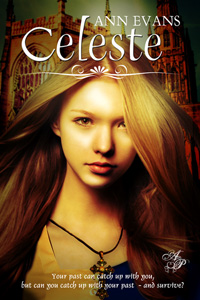
From my own point of view, Coventry has inspired my writing, with the illustrated Children’s History of Coventry, which many of the city’s schools have in their libraries. And my YA novel, Celeste, a time slip thriller set in Coventry, with the cathedrals as the backdrop.

How about you, how inspirational is your city to you and your writing?


My trailer for Celeste features the old and new cathedrals, and you can view it here: https://www.youtube.com/watch?v=AFDBEt9o3Fw


Tuesday, 8 November 2016

Welcome to author Peter Walters


I'm delighted to welcome Peter Walters onto my blog today. Peter is a friend and work colleague from our Coventry Telegraph days. With a wealth of knowledge about the city, he has now written his second book on Coventry entitled – Great War Britain: Coventry Remembering 1914-18.

Illustrated with wonderful old photographs from the city's archives, the book explores the 1914-1918 story of the place they called The Busiest Town In England, years that established Coventry as one of Britain's most important 20th century industrial dynamos. It's a tale often over-shadowed by the city's suffering in World War Two and has not been told often enough.

Peter's first book, The Story of Coventry, also evocatively illustrated, was the first full narrative history of Coventry for more than a decade, tracing the city's story from its beginnings around the year 1000 to the recent recession. Written for the general reader, it concentrates on the rich gallery of characters who have populated that colourful thousand years.


Peter and his wife, Barbara who is also a journalist, were already working at the Coventry Telegraph when I started back in the day. I asked him how he first got into writing.

“I was always keen on English at school and got an S level (grade 1) in it as well as A level. Stupidly, I was persuaded that law was a better career so did a law degree at Leeds University (69-72). When I finished I immediately went into newspapers, initially a weekly in Cheshire.

“I came to the Coventry Telegraph as a reporter but quickly switched to features. I was a general feature writer but found myself writing a lot about the city's history – I'd always been interested in history. I also liked profile writing and did a lot of those too. In later years I had a weekly light-hearted column and wrote leaders for the paper, the latter I think great training for a writer as it forces you to be succinct.”


Around 2011, publishers, The History Press approached him to write a book on Coventry.
“I was nervous about it but found it less difficult than I had imagined. I treated it as an extended feature, I suppose. As a journalist you are at least comfortable with putting pen to paper, so to speak.”

It took him around a year to research and write his first book, The Story of Coventry which came out in 2013.  This led to the writing of his second book featuring Coventry during the First World War. Great War Britain: Coventry Remembering 1914-18.

“I loved doing the research, most of it in the Herbert Museum's History Centre,” added Peter. “It felt like an extension of something I had always done on the paper – in the CET's Library. To be honest, I didn't find anything that came as a complete surprise as I'd written a lot about the city's history already. But Coventry's extraordinary monastic past was something I hadn't really grasped before and the incredible scale of its contribution to the First World War was also unexpected.”


With his interest and knowledge about the city of Coventry, when he's not writing – or reading, Peter conducts city walks for people with an interest in its history along with being involved in community projects; and in his free time, he plays tennis, enjoys film, theatre and music. I wondered whether there were any more books in the pipeline.

“I'd love to write more books,” Peter told me. “Although I'm not sure if I want to write more about Coventry. I feel I've 'done' the city in a way. I'd really like to write something in the popular history field with a national focus. I'm trying to work up an idea for the publishers at the moment.”

I'd like to thank Peter Walters for being on my blog today, and wish him every success with these books and good luck with future projects.


The Story of Coventry. https://www.amazon.co.uk/Story-Coventry-Peter-Walters/dp/1860776922/

Both books are published by The History Press. http://www.thehistorypress.co.uk/

If you would like to contact Peter, Email: peter@waltersconsultancy.co.uk.
Mobile 07748 116041.


Saturday, 3 September 2016

Welcome to writer Emilie Lauren Jones.


I'm delighted to welcome Emilie Lauren Jones to my blog today. Emilie is a budding writer with her first book of poetry Sitting on the Pier out now. In fact she has a book launch at the Big Comfy Bookshop, Fargo Village, Coventry on Saturday 15th October from 1pm-3pm. So make a note in your diaries.

Emilie is a member of the Coventry Writers' Group and a member of my own Monday Evening Writing Class when her bowling allows! Really keen to learn as much as possible about all aspects of writing, she is also studying with the National School of Journalism.

“The course is the short story writing course from the LSJ,” explained Emilie. “You are assigned a tutor who feeds back on the assignments. There is no time limit on handing them in so it's good one for people with lots of other commitments.”
Writing and understanding how magazines work has been in her blood since she was a child. Her mum founded the Coventry magazine, Chatterbox which is very much a family affair, and when Emilie was just 9 years old she began 'working' for the mag.
“I used to put a poem in each edition,” said Emilie. “And the whole family were involved in delivering and collating the magazines by hand. Grandad and I got so good that we could collate one forwards and one backwards to save time! As a teenager I learnt to use the professional design software and since then I've been involved in writing pieces of the editorial, setting pages and designing any new adverts that come in. Mum calls me her 'co-editor!' Although this is a voluntary position!
Emilie's day job is a HLTA (higher level teaching assistant) at a primary school in Coventry, working with individuals and groups and also covering classes with years 5 and 6. A job that she loves.

Emilie told me: “I do love my job and it comes without all the paperwork so I have time to write when I finish work whereas teachers, as you know, have to do a LOT of extra hours!”

However, she almost didn't get into teaching as the pull of writing was almost too strong. Emilie explained that when she was six months into teacher training at one of the top teacher training courses in the country, she had a dramatic change of heart.

She explained: “I was asked the question: ‘where do you see yourself in a year?’ And I answered: 'I see myself as a writer' which definitely wasn't what they wanted to hear!

“It was the uttering of these words that led to an afternoon of serious conversations and the eventual decision that I should not be completing an intense teacher training course. Before I left, the teacher I had been working alongside took me to one side and said: 'If they can do it, why can’t you?' The next day I began writing again.

“I quit my training and spent the year volunteering and writing the book. But because writing poetry doesn't pay too well I got a job as a TA and now as a HLTA.

“Having previously had individual poems and stories published I was aware of the challenges ahead but this time I was determined to make it work. I had spent too long wanting to be a writer whilst doing less and less actual writing; a dilemma I have found a lot of writers face at one point or another.

“The result of this period of writing came in the form of my poetry anthology Sitting on the Pier and I spent much of the summer performing and book signing anywhere that would have me – from literature festivals to churches to a market stall in Kenilworth! Within six months I had sold a couple of hundred copies in and around Coventry.

So, it was true – if they could do it, so could I. Okay, I’ve not sold millions of copies yet but I am writing and people want to read it and that means a lot to someone who wrote their first novel at six years old about Drippy the Tap.

I’ve also been fortunate to win a few competitions, again it’s a great feeling to know that people are enjoying your work. My aim has always been to write poetry that is ‘real’; poetry that stirs emotions and ideas that people can relate to. To me, poetry is about inclusion – usually each person who reads a poem will find something different in it and interpret it in their own way. The title Sitting on the Pier is intended to encapsulate this inclusion. I am at my most content when around nature, especially by the sea; I feel an inner peace and sense of belonging – I can just ‘be’ as I am and so can everyone else.


Sitting On The Pier

Sitting on the pier,
Because all are welcome here.
With their thoughts and dreams,
Their pasts and presents.
The sea air does not care
What mistakes you have made
Or will make.
The waters do not mind
If you are black or white or purple,
The sun and the rain
Do not discriminate,
They choose to fall equally on all,
Because they share this world.
The wood, rock, water, sand and cloud
Are content for me to sit with them
Here in my denim shorts
And worn sandals.
To think, remember, imagine.
To mourn or to laugh,
Together or alone.
Healthy or struggling,
To stay for a day or a lifetime.
All are welcome here.


THANK YOU SO MUCH EMILIE for being on my blog today, and good luck with the launch of Sitting on the Pier on Saturday 15th October at the Big Comfy Bookshop, Fargo Village, Coventry. See you there between 1pm-3pm.

Sitting on the Pier is available from Amazon at: https://www.amazon.co.uk/dp/095722530X
Or order either instore or online from Waterstones
For signed copies please email Emilie directly at: emsj13@hotmail.com

Discover more about Emilie Lauren Jones: http://www.emilielaurenjones.co.uk
Follow her on Twitter @emilielaurenxxx


Sunday, 13 December 2015

A LETTER FROM MY CHARACTERS by Ann Evans


It's lovely when you receive a letter from someone who's enjoyed your book. But a little more unusual when you get a letter from the characters themselves!

I was curious when the postman delivered a brown padded envelope, and even more curious to find a hand written letter on a kind of scroll, and something wrapped in a piece of black material and tied with a black ribbon.

A cursory glance at the letter had me noticing the words Cross of Aes Dana – which, if you've read my YA time slip book, Celeste you'll know is a magical pendant that my character Megan (alias Celeste) had to guard with her life as it possesses the power of eternal life.


I instantly thought it was from one of the teenagers that I'd spoken to at their school recently – until I saw the letter was signed by Megan, Fraya and Jamie. That trio of names rang a bell – my characters in the book!

They said they'd retrieved the Cross of Aes Dana for me and wanted to thank me for creating them!

Carefully, with excitement growing I untied the package. Oh my goodness! I couldn't believe my eyes. To actually see the Cross of Aes Dana, a figment of my imagination (although the tribe did exist a long, long time ago) but there it was in my hand.


It had the look of age, it had the gemstones, it had the feel. ..
A pendant cast in iron and inset with gemstones. It was
no bigger than a man's thumb and formed the shape of a cross.
In the centre was a garnet, blood red and a powerful protective force.
Inset along the four lengths were honey brown amber crystals and
jasper with layers of red, brown, and white — again for protection.
At the four tips of the cross were four small hematite stones with
their opaque red sheen that merged against the grey of the iron in
which they were set. Truly a fearsomely powerful mix.


I held it tightly, just as Megan had done…


As sleep took over, Megan tried to let her mind drift, to let
the memories flow back. If she could only make sense of all this,
she would be glad to remember everything. But nothing became
any clearer. Eventually as she was drifting halfway between sleep
and semi‐consciousness the image of a face formed in her mind — a
woman's face — like before.

She looked about thirty with dark brown plaited hair. Her
eyes sparkled at first as she mouthed incoherent words, but then
dimmed, and became wreathed in sadness as she faded away. Megan
tried to call her back, to ask what she had said. She
couldn't make out the words. It was so far back... so long ago.

Tossing and turning, murmuring in her sleep, Megan rolled
over and slept deeply. The face drifted back, closer, as if she were
leaning over Megan as she slept. And then she pressed something
into Megan's hand before fading away.

Megan felt the warm angular metal of a cross against her
skin, and smooth gemstones set within the iron, and the thin chain
that enabled it to be worn around the neck.

In her sleep Megan's fingers touched the pouch she wore
around her own throat. It contained a fusion of herbs to keep away
the plague — at least that's what the elders said, and who was she
to argue?

Her fingers tightened around the object in her hand. The
cross was heavy, made of iron — a burden in so many ways...
She slept on unconsciously checking the cross was still there
throughout the night, clasping it tightly in her hand.

Only as she started to wake did she feel it slipping away.
Desperately she tried to hang onto it but as consciousness took
over, so the cross slipped back into the unreal world of her dreams.
Her bedside lamp was still on and she uncoiled her clenched
hand and stared at it, half expecting to see the imprint of the cross
in her skin.

But there was nothing. Just marks of her fingernails in her
palms. She felt for the pouch of herbs around her throat. But of
course they, like the cross were simply the imaginations of a dream.
Or fragmented memories of a life she had lived long, long
ago.


I discovered who had taken the trouble to bring my story to life. A lovely lady called Val Hunt. Val is a fabulous award winning sculptor who uses recycled materials – particularly drinks can metal, to create stunning works of art. I've written about Val's work a few times for magazines, but I never expected this!

Please do take a look at Val's work. She is such a talented lady. Thank you, Val!

http://www.arthunt.co.uk/


And if anyone would like to read more of Celeste, it's available in paperback and as an ebook.


View the trailer at: https://www.youtube.com/watch?v=AFDBEt9o3Fw


I'd love it if you'd like me on Facebook https://www.facebook.com/Ann-Evans-Books-146957850210/?fref=ts

And follow me on Twitter https://twitter.com/annevansauthor


Friday, 6 February 2015

The Story of Celeste


Megan Miller doesn't believe in ghosts or in reincarnation. But that soon changes after moving to a new city and a new school. 

It starts with feelings of déjà vu. Vague feelings at first that remain annoyingly just out of reach. Then the flashbacks start – memories of ancient times and fragmented dreams of when she had been called Celeste. 

And then the haunting begins. After visiting the ruins of the old cathedral, Megan believes some dark ominous presence is haunting her, following her, whispering in her ear. And always the same question, where did you hide it?

Megan becomes entwined in a frightening and heartbreaking world as she slips uncontrollably between her present life and her medieval past. But the links are fiercely strong and she fears that a new friend is actually a past enemy – and evil has followed her through the centuries.


The idea for my YA novel, Celeste was first sparked when I was writing an article about Coventry's oldest church, St Mary Magdeline's in Wyken, Coventry. This ancient church which is still in regular use, dates back to the 12th Century and was built by the 4th Earl of Chester, Ranulf de Gernon (1099-1153).  


St Mary Magdalene's Church

As I wandered around the ancient gravestones and paused by the lepers window imagining those unfortunates receiving the Holy Eucharist through the small window in the stonework, I found myself drifting back in time, and a story began to formulate in my head.  


My original hero was going to be Ranulf, and my heroine was to be a young woman who hears echoes from the past when she visits the old church and hears him calling her name.


I even had the title – At the Bend in the River. However the story was stop/start for many years. It finally began to take shape when I took the main action away from the little church and centred it around Coventry's City Centre with its old and new cathedrals and the cobbled streets. 

My St Mary Magdeline's remained in the background, in the locality of where my heroine lives after moving to the city. Also I made her much younger. A 14 year old rather than an adult. I gave her a name, Megan Miller, Megan after my granddaughter, Miller because it hints at an old Medieval trade. 

Megan's family re-locate to the city, and the school she starts at, is my old Cardinal Wiseman Grammar School. The common where she walks – where she senses a sinister presence that whispers in her ear, is Wyken Croft. The story told itself to me as I walked my dogs around this area.
 
Ann and Lola
The small gemstoned cross that is at the heart of the story was a gift from the Gods. I can't remember when that formed in my head, I'm just grateful that it did! 

And the ghostly scene in Megan's bedroom when Friar Lucius – or rather his demonic spirit visits her in the dead of night through a dark shadow on the wall, was real! 

Just as you will read how Megan experiences this ghostly moment that terrifies her, it is actually based around a real incident from my childhood. It made quite an impact then and I'm glad I've finally been able to use it.

The Cathedral Spire, the 300 stone steps of the spiral staircase are also real. It's been some years since I climbed them, but the views through the slit windows as you go up, and then the view from the top would have been so different in Celeste's day.
 
Coventry's Lady Godiva, Pru Poretta
 As for Talitha, the hand-maid to Lady Godiva, she may have been real. I heard the name after a friend's granddaughter was christened Talitha. It sounds ancient, it suited the character. 

And Lady Godiva, well she is most definitely real – and an important figure in Coventry's history.  

Today the city has its very own Lady Godiva, Pru Poretta, an ambassador for Coventry. 

Maybe, after you've read Celeste, you will want to follow in her footsteps. I hope you do.


Here's a short extract from Celeste as she starts a new school in a new city, knowing no one.  
Megan scanned the sea of strangers. Boys and girls of her age, all staring at her, sizing her up, judging her, deciding whether she was friend or foe. One or two were whispering, others were smiling. 
And then one face. One face shone out from all the others, and Megan’s knees buckled with shock.
Oh there you are Ruth! Megan almost cried out in delight, a huge smile breaking out across her face. There you are! It's been so long since I saw you...  
The next second she halted herself. Stopped herself from falling over her own feet to reach the girl with short corn coloured hair and dark eyes. What on earth was she thinking about? Who on earth was she thinking about? She didn't know the girl! She didn't know anybody here. 
But just for one split second, she had such a feeling of recognition it left her trembling. 
“Thank you, Freya,” Mrs Lovejoy put her hand lightly on Megan's arm, indicating for her to go and sit by the girl who had spoken – Freya.
Freya? Where on earth had she got the name Ruth from?  

                                                          * * *  
If you would like a pdf version of Celeste to read and review, I would be happy to send you one.  
Celeste is available as an ebook and in paperback from Barnes & Noble, Waterstones, Amazon and other outlets. www.amazon.co.uk/Celeste-Ann-Evans-ebook/dp/B00KQ8XIGE
Have you read The Beast, The Reawakening and Rampage?  
Need tips on writing and getting published, my book Become a Writer – A step by step guide may be just the thing for you. Available in paperback and as an ebook. http://www.amazon.co.uk/Become-Writer-Step-Guide/dp/1907670246

My website: www.annevansbooks.co.uk

Friday, 25 July 2014

Samantha Clarke talks about A History of Caludon Castle.


I'm extending a warm welcome to Samantha Clarke on my blog today. As well as being the assistant editor on the fascinating academically researched non-fiction book, A History of Caludon Castle – The Lords of the Manor of Caludon she's also a friend and colleague from the good old days of working at the Coventry Telegraph.

Before chatting about the book I asked Sam about her career in journalism and whether it had always been her ambition to go into this line of work. Here's what she said:

“I wanted to be a journalist from a very early age. My father was a journalist and he'd tell me all these exciting tales. I also developed an interest in local news very early on. I remember a careers talk at school when I was about 11 or 12 and the careers advisor asked all of us if we knew what we wanted to do. When I told her I wanted to be a journalist I remember she said: 'What's your name? I'll look out for you in the Coventry Telegraph in 15 years time.' I started there 12 years later. I always wondered whether she did remember my name and look for my by-line.”

Sam worked on the Coventry Telegraph for many years, in fact we sat two desks apart! I asked her about the best and worst parts of working there. 

“I could highlight so many 'best parts' I started at the Telegraph at the age of 24, having previously trained at the Rugby Observer for four years, working my way up to Deputy Editor. I'm very much a people person and I believe there is no better profession to get the opportunity to mix with people from all walks of life. I really enjoyed 'people' stories and have met such inspiring individuals along the way.

"Over 12 years on newspapers I covered everything from local fairs to murders and sudden deaths among children. It sounds morbid but the tragic stories were always my favourites as without exception, despite prior nerves when door-knocking, I always received good vibes from people and in a lot of cases the families would thank me for listening. I almost felt like I'd helped them to open up and share their grief. I received a lot of thank you letters along the way and have kept all of them to this day.

“Also I would argue that I worked in newspapers during the glory years. I have made some excellent friends for life along the way. Perhaps contrary to common belief journalists are a great bunch of people and I had the privilege of working with some really talented, inspiring individuals. I still see them now, almost seven years after leaving the newspaper.”

As for the worst parts, Sam said, “The worst part - especially when I worked on the Rugby Observer, which was a weekly newspaper, would be following a good story over a few days
and preparing it for the following week's newspaper, only to have certain developments kill the story before it gets into the press. That was so frustrating!”


Talking about A History of Caludon Castle, Sam said, “It is actually my father's book and had been in the pipeline for many years. It was during his time as a pupil at Caludon Castle School where
he became fascinated with this mysterious ruin. Both my father and I grew up in the same house in the shadows of the castle. He had played in Caludon Park as a young boy and both he and my grandfather Jack very often took me there when I was a little girl. As I grew older I too became fascinated by it but until now little was known about its history as it wasn't very well documented.

“I became involved in the book by accident. About three years ago, having watched the book slowly all come together and hearing my Dad speak of the latest findings, I asked if I could read it. Perhaps due to my background in journalism I found myself proof-reading, rather than reading the book. As I got more into the proof-reading I found it an extremely enjoyable experience and a real learning curve. I haven't read it since it's been published but I am looking forward to reading it as a
reader, as opposed to a proof-reader.”

I suggested to Sam that it must have taken an awful lot of research. She explained, “The book was researched by two professional historians – George Demidowicz and Stephen Johnson. George had been the Building Conservation Officer for Coventry City Council for over two decades and
was also the head of the Conservation and Archaeology Team. Prior to his involvement in the book George had also been involved in repairs of Caludon's ruins. Stephen had previously been the Administrator of the Manorial Society for Great Britain before becoming an independent historical researcher in 2001.


“The book received some great support from the Lord Clifford of Chudleigh, whose ancestors lived at the castle. While the book was being put together my father, along with George and Stephen, made a number of visits to Lord Clifford's home - Ugbrooke Park in Devon - where they were allowed access to historical documents relating to Caludon and dating back to the 1220s. These were invaluable and took the book to a whole, exciting new level. I'm not sure how long George and Stephen worked on the book but I first met them both back in about 2008 and it was already well underway then.It has been a real labour of love on all sides.”

Sam reported that the team behind the publication of the book have been pleasantly surprised by the way it's been received. “We have received an excellent response to the book - with demand far
higher than we had expected. We thought orders would come primarily from residents who had grown up in the vicinity of Caludon Park but we've taken orders from all over - including one from New Zealand! The press showed great interest too with a fantastic feature in the Coventry
Telegraph and a great review in the Birmingham Post. We have been delighted with the response.”

“I had never edited a book before. It was a real learning curve for me and a fantastic experience. I went on to create the index as well which from memory was 2,000 words alone. This was painstaking but again a great experience which has given me another string to my bow. Since undertaking the Caludon project I have found a new skill which I love. I've since joined the SfEP as an Associate Member and am looking to train as a proof reader / editor. It's very early days but I can't wait to see what this new chapter may hold.

Read more by following this link:
http://www.coventrytelegraph.net/news/coventry-news/story-coventrys-calu
don-castle-told-6862913


A History of Caludon Castle - The Lords of the Manor of Caludon.
The book is academically researched and is the only book solely dedicated to Caludon and its manor and traces the history from the 1200s through to the present day.

It contains 220 pages, with 76,000 words and 110 illustrations, with references to Caludon's links with royalty and William Shakespeare.

The book marks the fulfilment of John Clarke's lifelong ambition which sought to unravel the 800 year-old history of the castle.

The book received sponsorship from Shortland Horne Residential Ltd.

Publisher John Edward Clarke OBE
Author and Editor George Demidowicz
Co-author Stephen Johnson
Assistant Editor Samantha Clarke


To purchase the book, or for more details contact Century PR on 024 7622 8881.